Tudor vs Longines: Better Value for a First Swiss Automatic?
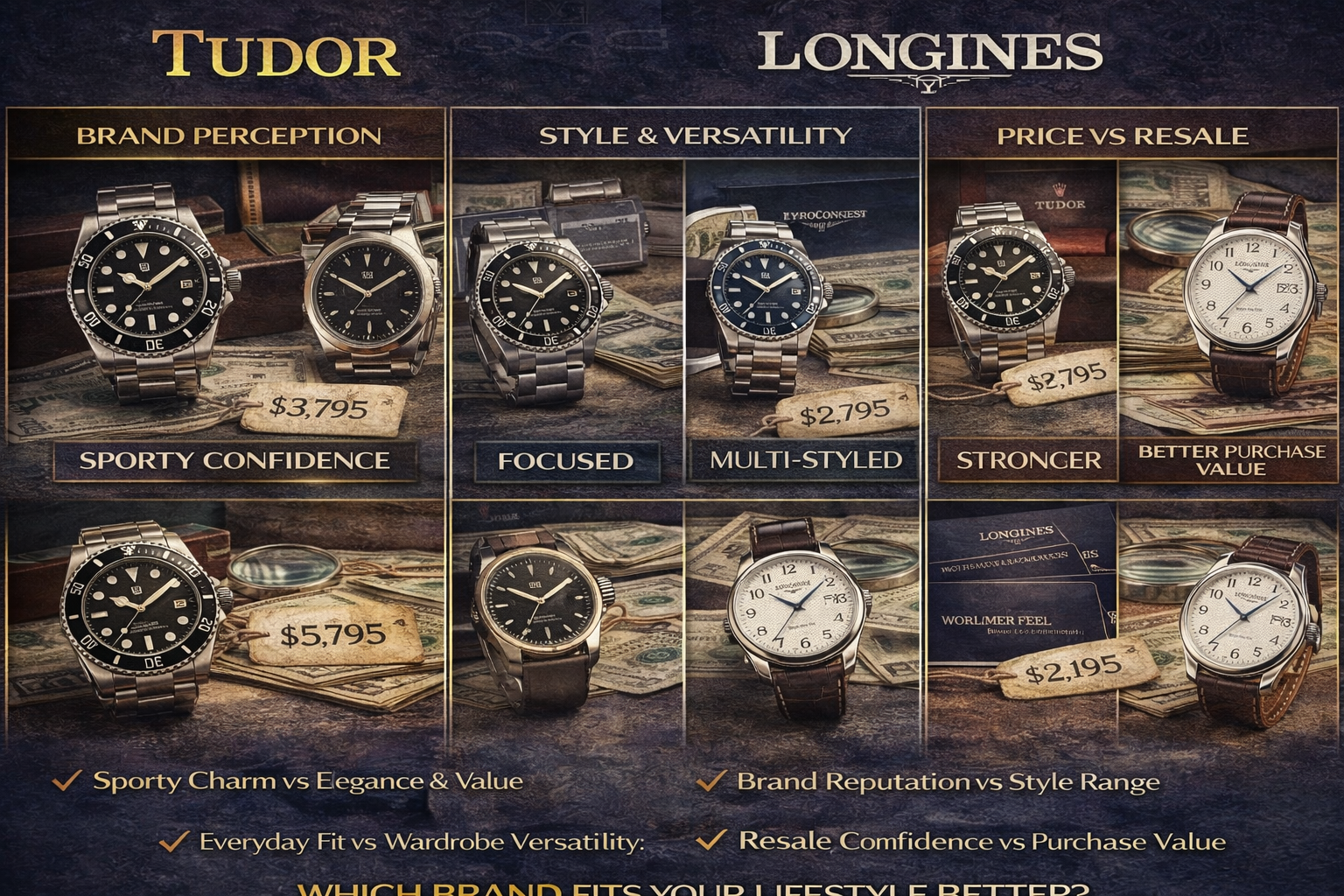
If Rolex vs Omega is the big mainstream luxury-watch debate, Tudor vs Longines is often the smarter real-world one.
That is because this comparison usually happens one step earlier in the buying journey, when the buyer is not just dreaming about a luxury watch, but trying to make a good decision with real money. They want Swiss credibility. They want a watch that feels serious. They want something they can wear with confidence for years. But they also do not want to overspend, buy the wrong style, or end up with a watch that looked perfect in videos and felt wrong on the wrist.
That is where Tudor and Longines become such an interesting matchup.
Both brands can make a strong first Swiss automatic. Both have heritage. Both have real enthusiast respect. Both can give you far more satisfaction than many buyers expect at this level. But they do not solve the same problem in the same way.
Tudor usually feels more direct, more sporty, and more modern in its identity. Longines usually feels broader, more elegant, and often easier to enter at a lower cost. One often wins on emotional solidity. The other often wins on range and value flexibility.
So the right question is not “Which brand is better?”
It is “Which brand gives me the better first Swiss automatic for the way I actually live?”
Quick answer
Tudor usually makes more sense as a first Swiss automatic if you want a sportier brand image, stronger modern watch presence, and a watch that feels robust, current, and easy to wear as a long-term daily piece. Longines usually makes more sense if you want more variety, a slightly more refined or dress-capable feel, and stronger value across different budgets and styles. Tudor often wins on confidence and cohesion. Longines often wins on breadth and bang for the money.
Why first-time Swiss watch buyers get stuck here
This comparison shows up because both brands feel like a meaningful step up from entry-level automatics, but neither feels as financially intimidating as the top luxury names many people think of first.
That matters.
A first Swiss automatic is often the point where buying gets more emotional. You are no longer just asking whether a watch is decent. You are asking whether it feels like the beginning of your taste becoming more serious.
That is why buyers get stuck between Tudor and Longines. Tudor often feels like the cleaner enthusiast move: robust, respected, sporty, and close enough to the Rolex universe to feel quietly aspirational. Longines often feels like the more rational and style-flexible move: real Swiss history, broad model range, and better odds of finding something that fits both your taste and your budget.
Before choosing a brand, it helps to be honest about what you actually want from a daily mechanical watch. That is exactly why Best Everyday Automatic Watch Features: 8 Specs That Matter More Than Marketing is worth revisiting first. Once you know whether you care most about comfort, thickness, dial clarity, water resistance, bracelet feel, or formal versatility, this comparison becomes much easier.
Tudor’s biggest advantage: a stronger modern identity
Tudor is unusually good at feeling focused.
When buyers think Tudor, they usually picture a certain kind of watch: sporty, solid, clean, masculine without being cartoonishly oversized, and built for real-world wear. Even when the model families vary, the brand identity tends to stay coherent.
That is one of Tudor’s biggest strengths for a first Swiss automatic. The watches often feel easy to understand. You are buying into a brand with a strong visual point of view, and that creates confidence.
Tudor also tends to work especially well for buyers who want their first Swiss automatic to feel like a real daily companion rather than a special-occasion object. There is often an appealing sense of straightforwardness there. The watches feel like they want to be worn, not just admired.
For a buyer who wants one watch to handle work, weekends, travel, and casual dinners without constant second-guessing, Tudor can feel very convincing. That logic overlaps naturally with Tool Watch vs Dress Watch: Which One Fits Your Lifestyle Better?, because Tudor is often strongest when the buyer leans a little more tool-watch than dress-watch in real life.
Longines’ biggest advantage: more ways to get it right
Longines feels different.
Where Tudor often wins by being more tightly defined, Longines often wins by giving buyers more ways to find themselves. The brand covers more ground. Some Longines watches feel sporty. Some feel vintage-inspired. Some feel quietly formal. Some feel like excellent middle-ground daily pieces that do not scream for attention but still look properly Swiss and well considered.
That variety is a huge advantage for a first Swiss automatic buyer.
A lot of people do not actually want “a sporty watch.” They want a watch that works with knitwear, office clothes, travel, weekends, and maybe a dinner jacket twice a year. Others want something classical without feeling old-fashioned. Others want value first and branding second.
Longines is often where those buyers land well.
That is also why Longines can make more sense for people whose taste is still forming. The brand gives you more room to discover whether you naturally lean cleaner, dressier, more vintage, or more versatile in your watch preferences. If you are still sorting that out, Dress Watch vs Everyday Watch: What’s the Real Difference and Which Should You Buy First? is a good mindset check before you commit to a brand that may push you harder in one direction.
Tudor usually feels stronger if you want your first Swiss watch to feel “serious” immediately
This is an emotional point, but it matters.
A lot of buyers want their first Swiss automatic to feel like a clear upgrade from everything they wore before. They want weight, solidity, presence, and a brand image that feels modern and confident. Tudor often delivers that feeling quickly.
There is usually less ambiguity in the experience. You put the watch on and it feels substantial. The styling often feels deliberate. The identity feels current. Even buyers who cannot explain exactly why often say a Tudor feels like a bigger step.
That can be a major advantage if this purchase is meant to mark something significant: a promotion, a career milestone, a birthday, or the point where you stop buying “good enough” watches and start buying what really fits your long-term taste.
Longines usually feels stronger if you want value without losing elegance
Longines has a different kind of appeal.
It often attracts buyers who want a real Swiss watch with history and refinement, but do not want their first serious purchase to feel overly aggressive, overly sporty, or financially stretched. There is often a smoother value story there.
Longines also works especially well for buyers who need more wardrobe flexibility. A lot of people underestimate how quickly an overly sporty watch can feel limiting if their real life includes office wear, cleaner casual style, or more formal settings. Longines often has an easier time living in those in-between spaces.
That is why some buyers who think they want a rugged sports watch eventually realize they actually want a balanced everyday watch that can dress up more easily. If that sounds familiar, Bracelet Watch vs Leather Strap Watch: Which One Is Better as Your First Automatic? is surprisingly relevant here, because Longines often gives buyers more natural room to move between bracelet and strap moods.
Which brand fits your style better?
This is where the decision becomes real.
If your wardrobe leans sporty, minimal, denim-heavy, polo-heavy, casual business, or weekend-focused, Tudor often feels more natural. If you like watches that feel grounded, purposeful, and quietly rugged, Tudor is very hard to ignore.
If your wardrobe includes more tailoring, knitwear, loafers, cleaner silhouettes, or you simply prefer a slightly more refined visual tone, Longines may fit more easily. That does not mean Longines is “dress only.” It means the brand often has a more graceful path between casual and polished.
This matters because first-watch regret often has less to do with the movement and more to do with everyday mismatch. A watch can be excellent and still feel wrong if it clashes with how you actually dress.
A simple real-world example: a buyer who spends most weekdays in an office and wants one Swiss automatic for meetings, smart-casual dinners, travel, and weekend wear may end up finding Longines easier to integrate. A buyer who wants more visual toughness, more bracelet-first confidence, and a stronger sporty identity may end up loving Tudor more.
If you are not fully sure whether your taste is cleaner or more utility-driven, Black Dial vs White Dial Watch: Which One Is More Versatile for Everyday Wear? and Date Window vs No-Date Watch: Which One Is Better for Everyday Wear? are both useful gut-checks because they reveal what kind of everyday watch personality you actually prefer.
Comfort, thickness, and wrist feel matter more than people think
A first Swiss automatic is often bought with the eyes and judged later by the wrist.
That is why comfort matters so much. Case size, thickness, lug shape, bracelet articulation, and overall balance can make a watch feel either like a natural extension of you or like something you admire more than you enjoy.
Tudor often appeals to buyers who like a stronger wrist presence and a slightly more planted feel. Longines often appeals to buyers who want a smoother transition between sporty and refined, and who may be more sensitive to how a watch sits under a cuff or across a smaller wrist.
This is exactly why Automatic Watch Size Guide: 36mm vs 38mm vs 40mm vs 42mm — What Actually Fits Your Wrist?, Automatic Watch Thickness Guide: Why 11mm Feels Elegant and 14mm Feels Sporty, and Best Automatic Watches for Small Wrists: What to Look for Before You Buy are all relevant to this decision. Brand reputation fades quickly if the watch never quite feels right on your wrist.
Which brand is better for a one-watch collection?
This is a very practical question, and it separates buyers quickly.
If you want your first Swiss automatic to become your main watch for years, Tudor often makes a strong case because the brand’s best-known watches tend to feel purpose-built for regular wear. They project consistency. You can throw them on with jeans, overshirts, polos, and casual tailoring without feeling like you are trying too hard.
Longines can absolutely work as a one-watch brand too, but it depends more on which side of the catalog you are drawn to. The right Longines can feel more versatile than buyers expect, especially if you want a cleaner bridge between dressy and casual. In that sense, Longines can sometimes be the better one-watch solution for someone whose life is less rugged and more mixed.
This is why the idea behind One-Watch Collection Explained: How to Choose the Single Automatic Watch You’ll Actually Keep Wearin matters here even if you are not literally planning to own only one watch. Your first Swiss automatic often becomes your default watch, so you should buy it like that matters.
What about value and resale?
This is where the conversation gets interesting.
Tudor often feels stronger on long-term confidence. Buyers tend to trust the brand story, the sporty demand, and the general market recognition around it. Even if a buyer is not obsessed with resale, there is comfort in feeling that the watch occupies a clear place in the market.
Longines often feels stronger on purchase value. The buyer frequently looks at the watch, the finishing, the heritage, and the entry cost and thinks, “This is a lot of watch for the money.”
Those are two different kinds of value.
Tudor value often feels cleaner after the purchase: the ownership feels solid, the brand feels easy to explain, the product feels durable in your collection. Longines value often feels strongest during the purchase: the buyer sees more choice, more affordability, and more flexibility.
If budget is still a major factor, it may help to reset your expectations with Best Automatic Watches by Budget: $300 vs $500 vs $1000 — How to Choose the Right One, Best Automatic Watches for Beginners: Top Picks & Buying Tips, and Best Swiss Automatic Watches Under $1000: Luxury Feel Without the Luxury Price. Sometimes buyers aiming at Tudor or Longines realize they either want to save longer or start lower with more intention.
A practical buyer example
Imagine two buyers with similar budgets and very different lifestyles.
Mark wants his first Swiss automatic to feel like a solid, modern step up. He wears dark denim, boots, knit polos, chore jackets, and casual office clothes. He wants the watch to feel robust and quietly cool. He does not need it to disappear under a dress cuff every day, and he likes the idea of a brand with a more focused sporty identity.
Tudor probably makes more sense for Mark.
Now imagine Ethan. He works in a more formal office, wears lightweight tailoring and knitwear during the week, and wants a Swiss automatic that still feels tasteful with a bracelet on Friday and a leather strap on Sunday. He is value-conscious, but not cheap. He wants his first serious watch to feel elegant, wearable, and flexible rather than overtly rugged.
Longines probably makes more sense for Ethan.
Neither buyer is more correct. They are just solving different lifestyle problems.
Which brand is more beginner-friendly emotionally?
This is a subtle point, but it matters for a first purchase.
Tudor often feels easier to desire. The identity is more concentrated. Buyers see it, understand it, and quickly imagine themselves wearing it. That makes it emotionally easy to commit to.
Longines often takes a little more thought, but can reward that thought better. It may not always hit with the same instant “yes” as Tudor, but for many buyers it ends up being the smarter and more wearable answer over time.
That is why Tudor often wins the first-impression test, while Longines often wins the “sit with it for two weeks” test.
Maintenance and real ownership
A first Swiss automatic should not just feel exciting on day one. It should still make sense after the honeymoon period.
That means it is worth thinking about service, accuracy expectations, and day-to-day upkeep before buying. A lot of first-time Swiss buyers romanticize mechanical ownership, then get surprised by the practical side of it later. If you are still new to that part, How Often Should You Service an Automatic Watch? Intervals, Costs, Warning Signs & What to Expect and Are Automatic Watches Accurate? Real-World Tolerances, Why They Drift & How to Improve Accuracy are worth reading before you buy with purely emotional expectations.
And if your watch needs to handle weather, travel, or regular active wear, it also helps to understand what water resistance does and does not really mean in daily life. That is why Water Resistance Explained for Everyday Watches: 30m vs 50m vs 100m vs 200m — What You Can Actually Do belongs in the buying conversation too.
A simple way to decide
Choose Tudor if these thoughts sound like you:
You want your first Swiss automatic to feel sporty, substantial, modern, and easy to wear as a serious daily watch. You prefer a stronger, more focused brand identity. You like watches that feel robust and immediately confident.
Choose Longines if these thoughts sound like you:
You want more style flexibility, more graceful everyday versatility, and stronger purchase value. You care about Swiss heritage, but you do not need the watch to feel overly aggressive or overly obvious. You want a first Swiss automatic that can live comfortably between dressy and casual.
Final verdict
If you want the stronger sporty identity, the more concentrated brand image, and a first Swiss automatic that feels like a clean step into serious watch ownership, Tudor usually makes more sense.
If you want wider style range, smoother value, and a first Swiss automatic that may fit more wardrobes and more budgets with less friction, Longines often makes more sense.
The real answer is that Tudor is often the more emotionally immediate choice, while Longines is often the more quietly rational one.
If your taste leans rugged, modern, and bracelet-first, Tudor is probably the better fit. If your taste leans versatile, refined, and a little more wardrobe-aware, Longines may be the better buy.
For a first Swiss automatic, that difference matters far more than internet hype.
FAQ
Is Tudor better than Longines for everyday wear?
Not automatically. Tudor often feels more naturally sporty and robust, but Longines can be more versatile if your real life includes office wear, dressier settings, and mixed wardrobe use.
Is Longines the better value brand?
For many buyers, yes. Longines often offers more variety and a very strong sense of value at the point of purchase. Tudor may feel stronger in long-term emotional confidence.
Which brand is better for small wrists?
That depends on the specific watch, but buyers with smaller wrists should pay close attention to diameter, lug-to-lug length, and thickness rather than choosing by brand alone.
Is Tudor closer to Rolex in feel?
In brand perception, many buyers feel that way. Tudor often carries a stronger sporty-luxury aura, which is part of why it feels so appealing as a first serious Swiss watch.
Is Longines too dressy for a first automatic?
Not at all. Longines has plenty of everyday-friendly options. In fact, for some buyers, its balance between refinement and practicality is exactly what makes it a better first Swiss automatic.