Manual Winding vs Automatic Winding: Differences, Pros, Cons & Best Practices
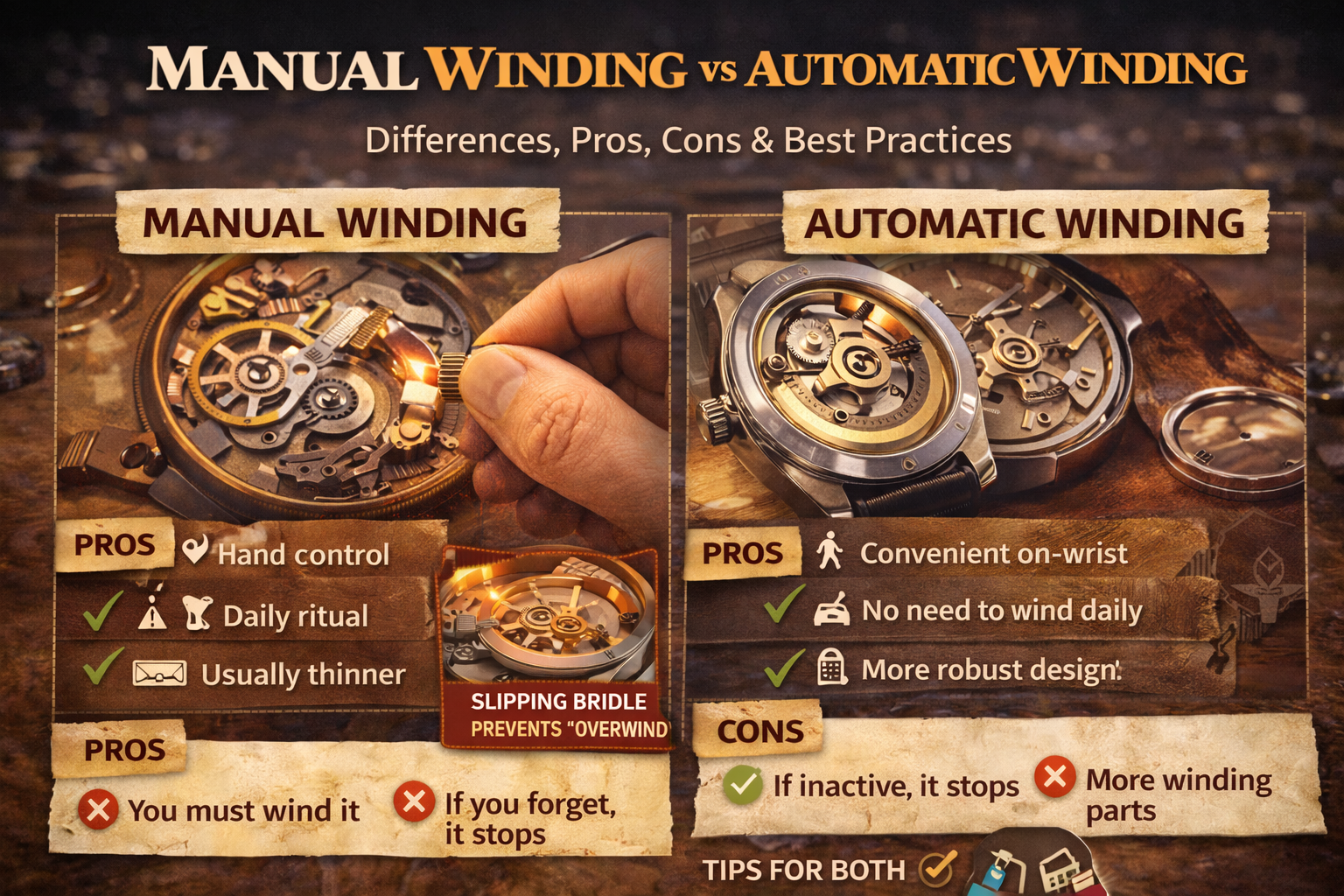 “Automatic” doesn’t mean you can never wind a watch by hand—and “manual” doesn’t mean it’s fragile. The real difference is how the mainspring gets energy and how that affects daily use, maintenance, and accuracy.
If you’re new to the topic, start here:
What Is an Automatic Watch? Pros, Cons & Who Should Buy One
Quick Answer
-
Automatic winding uses a rotor to wind the mainspring as you move.
-
Manual winding relies on the crown only—no rotor.
-
Many automatic watches can be hand-wound, and doing a small top-up is often helpful.
-
The best choice depends on your routine and whether you rotate watches.
To understand the mechanics behind both, read:
How Does an Automatic Watch Work? Simple Beginner Guide
What Is Manual Winding?
A manual-wind watch stores energy in the mainspring, but the only way to add energy is by turning the crown.
Pros
-
Simple movement architecture (no rotor system)
-
Often thinner profile (depending on design)
-
Many enthusiasts enjoy the daily ritual
Cons
-
You must wind it regularly
-
If you forget, it stops
What Is Automatic Winding?
An automatic watch has a rotor that winds the mainspring while you wear it.
Pros
-
Convenient for daily wear
-
Reduces the need for daily winding
-
Great if you want “put it on and go”
Cons
-
If you don’t wear it enough, it can stop
-
More parts in the winding system than a pure manual
If your automatic stops off-wrist, that’s normal power reserve behavior:
Do Automatic Watches Stop If Not Worn?
Can You Hand-Wind an Automatic Watch?
Often yes (but not always). Many modern automatics support manual winding via the crown.
When hand-winding an automatic is useful
-
The watch is fully stopped and you want it to start strong
-
You have a low-activity day and want a top-up
-
You rotate watches and want stable power
Related safety:
Can You Overwind an Automatic Watch?
How Much Should You Wind? (Simple Rule)
A practical habit:
-
If the watch is stopped: give it a short, gentle wind, then wear it
-
If it’s running but low: a small top-up can help
Stop if the crown feels rough or unusually tight—don’t force it.
For long-term reliability habits, follow:
How to Maintain an Automatic Watch: Daily Wear, Storage & Servicing
Does Winding Affect Accuracy?
Indirectly, yes. Many movements keep time more consistently when they’re not near empty. If your watch is frequently low on power, timekeeping may be less stable.
Accuracy baseline:
Are Automatic Watches Accurate?
The #1 Setting Mistake: The Date “Danger Zone”
Whether a watch is manual or automatic, the date mechanism can be damaged if you change the date at the wrong time window.
Safe guide:
How to Set an Automatic Watch Safely
Manual vs Automatic: Which Should You Choose?
| If You Want… | Choose This |
|---|---|
| Maximum convenience for daily wear | Automatic |
| A simple ritual and thinner feel | Manual winding |
| Less resetting when you wear it daily | Automatic |
| You rotate watches a lot | Automatic + occasional hand-wind (or just accept resets) |
If you’re deciding between mechanical and quartz for convenience, compare:
Automatic Watch vs Quartz: Differences, Pros & Which to Choose
FAQ: Manual vs Automatic Winding
Is manual winding bad for an automatic watch?
Not if the watch supports it and you do it gently. It can be helpful when starting from a stop.
Can winding damage the movement?
Forcing a rough crown can. Normal winding is fine.
Why does my automatic still stop even if I wear it sometimes?
It may not be getting enough motion to build reserve. See:
Do Automatic Watches Stop If Not Worn? Power Reserve, Why It Happens & Easy Fixes
Does winding fix a watch that runs fast?
Not usually. Fast running is more often magnetism or regulation:
Watch Magnetism: Signs Your Watch Is Magnetized, How to Test It