What Is an Automatic Watch? Pros, Cons & Who Should Buy One
If you’ve seen “automatic” on a watch listing and wondered what it actually means, you’re not alone. “Automatic” sounds complex, but the core idea is simple: the watch powers itself using your wrist movement.
This guide explains how automatic watches work, what to expect in daily use, and how to decide whether an automatic watch fits your lifestyle and budget.

1) What “automatic” means (in plain English)
An automatic watch is a type of mechanical watch that winds itself as you wear it. Inside the watch is a moving weight (often called a rotor). As your wrist moves, the rotor turns and helps wind the mainspring that powers the watch.
Key point: No battery is required for the movement itself.
2) Automatic vs quartz: the everyday differences
Most new buyers are choosing between automatic and quartz. Here’s the practical comparison:
Automatic (mechanical)
Best for: people who enjoy craftsmanship and “watch ownership” as a hobby
-
Often has a smoother sweeping seconds hand
-
Needs periodic servicing over the long term
-
Timekeeping can vary (some daily deviation is normal)
Quartz (battery-powered)
Best for: people who want accuracy and low maintenance
-
Very accurate day-to-day
-
Battery replacement needed (usually every 1–3 years, depending on model)
-
Generally more affordable at entry levels
Rule of thumb:
If you want the easiest daily watch, quartz is often simpler. If you want tradition and mechanical charm, automatic is worth considering.
If you want a clearer side-by-side breakdown, see our automatic vs quartz comparison here.
3) How accurate is an automatic watch?
Automatic watches are not typically as precise as quartz watches. That’s normal.
What matters most is:
-
whether the watch is consistent (stable daily deviation)
-
whether the accuracy is acceptable for your routine
-
whether you’re comfortable resetting occasionally
Practical tip: If exact time to the second matters every day, quartz may fit better. If you're curious about the mechanics behind automatic watches, you can read our detailed guide on how an automatic watch works.
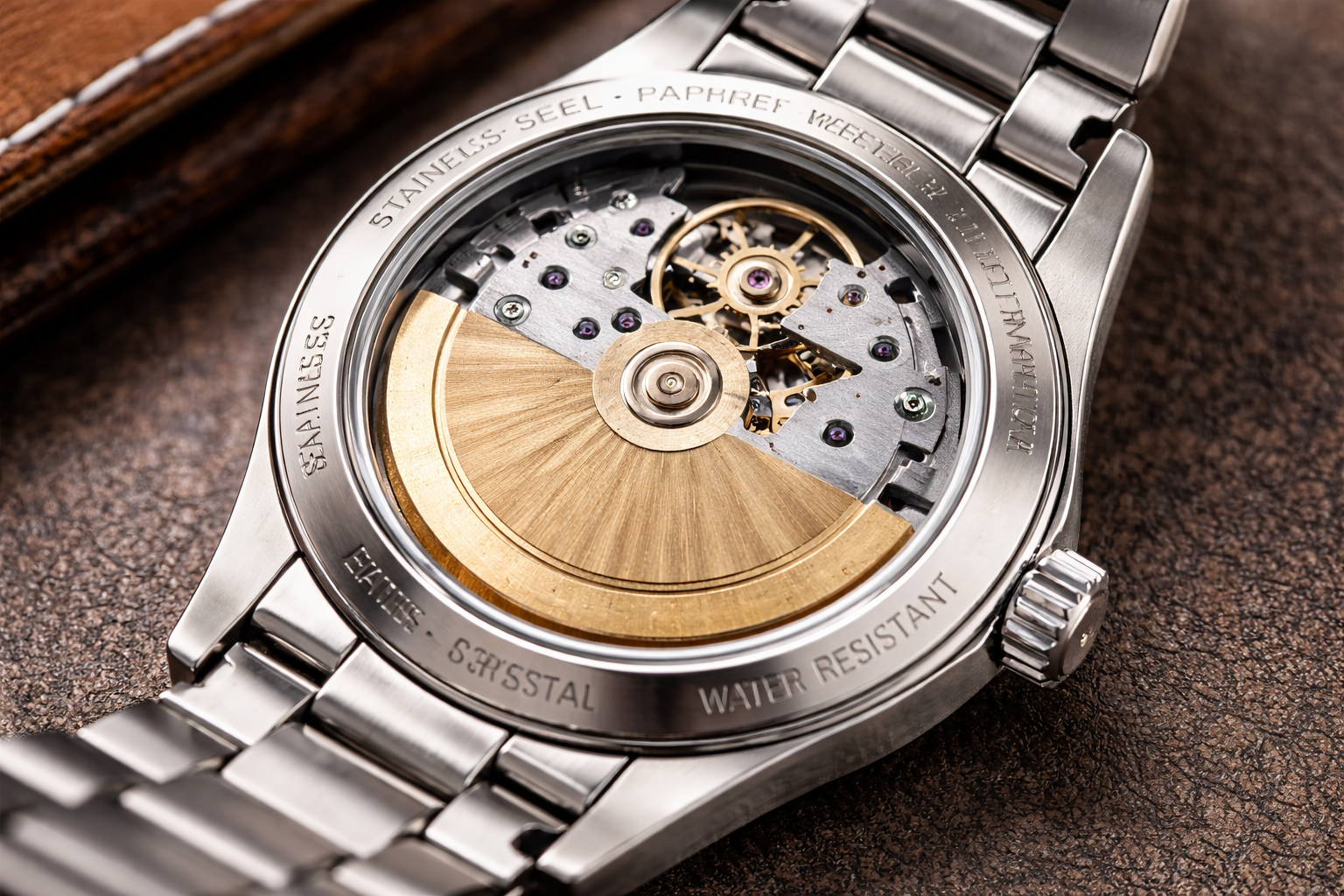
4) Power reserve: what it is and why it matters
Power reserve is how long an automatic watch keeps running when you’re not wearing it.
Many entry and mid-level automatics offer a reserve around 30–80 hours (varies widely). If you rotate watches often, a longer power reserve can be more convenient. Still deciding whether an automatic watch is right for you? You may also want to compare it with quartz watches in our automatic vs quartz comparison.
Easy habit:
If you don’t wear your automatic daily, get used to setting the time when you put it on.

5) Do you need a watch winder?
For most people: no.
A watch winder can be useful if:
-
you own multiple automatics and rotate them
-
your watch has complications you dislike resetting
But it’s not required for ownership. Many automatic watch owners simply set the time when needed.
6) How to choose your first automatic watch (simple checklist)
When selecting an automatic watch for everyday wear, prioritize:
-
Comfort & size (case diameter + lug-to-lug + thickness)
-
Legibility (clean dial, good contrast)
-
Crystal (sapphire is a strong plus for scratch resistance)
-
Water resistance that matches your routine
-
Warranty / returns you understand
7) Automatic watch care basics (easy wins)
You don’t need special tools. Just avoid the common mistakes:
-
avoid steam/hot showers
-
dry the watch if it gets wet
-
wipe the case/bracelet with a microfiber cloth after wear
-
store it in a dry place away from direct sunlight
FAQ
Is an automatic watch better than a quartz watch?
Not objectively—just different. Automatic is about mechanical craftsmanship and feel. Quartz is about accuracy and convenience.
Can an automatic watch stop if I don’t wear it?
Yes. When the power reserve runs out, it stops. You’ll need to reset it next time you wear it.
Are automatic watches good for daily wear?
Yes—if you choose the right size, materials, and water resistance for your routine.
Conclusion
An automatic watch is a self-winding mechanical watch powered by your movement. If you enjoy craftsmanship and don’t mind occasional time-setting, it can be a rewarding daily companion. If you want maximum accuracy with minimal maintenance, quartz may be the better fit. Once you own an automatic watch, proper daily wear and storage are essential. Here's a complete guide on how to maintain an automatic watch.