How Long Do Automatic Watches Last? Lifespan, Durability, and What Really Determines Longevity
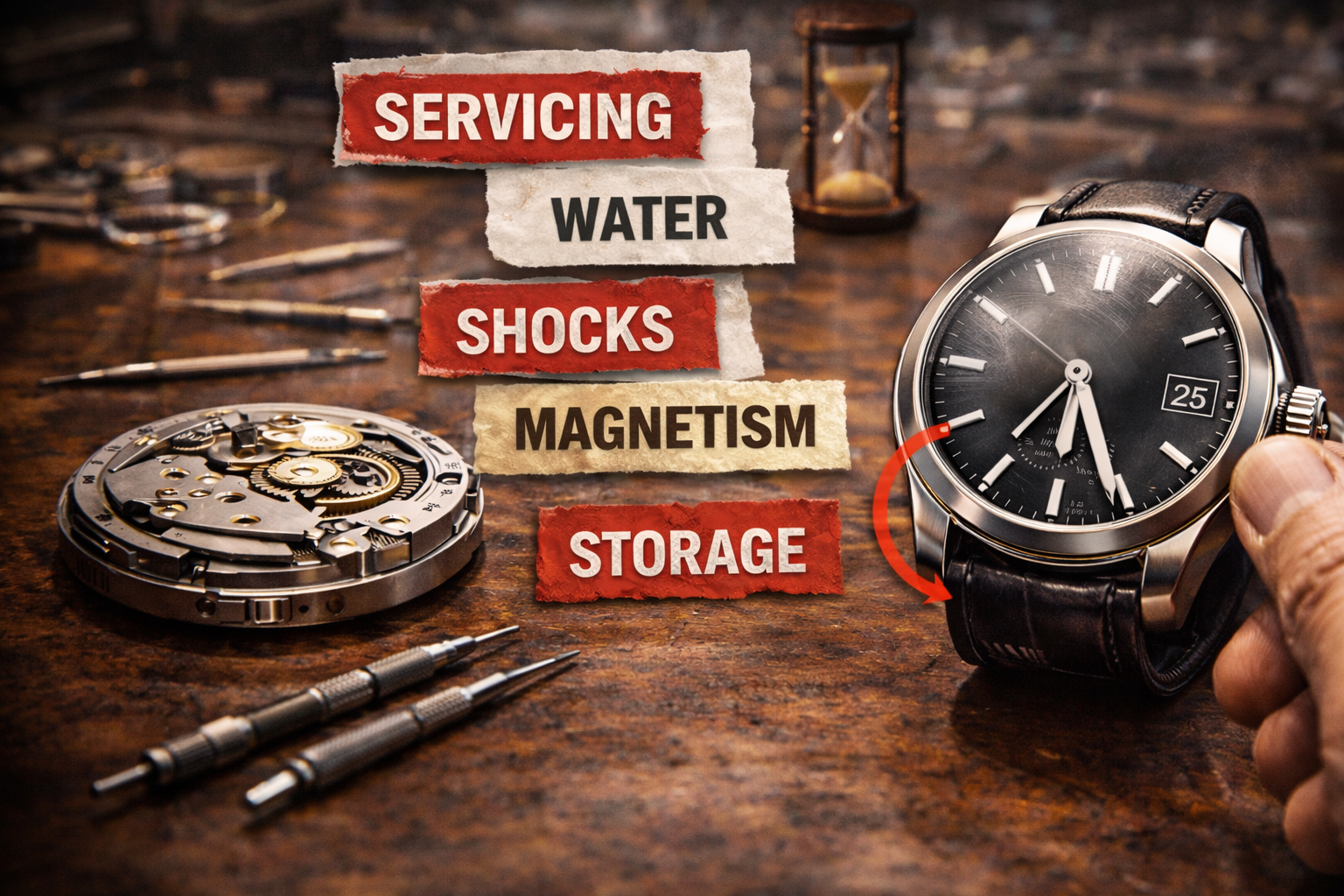 A well-made automatic watch can last decades—and in many cases, a lifetime. The real question isn’t whether an automatic watch can last, but what determines how long it lasts in real life: servicing, wear habits, water exposure, shocks, and how the watch is stored.
If you’re new to automatics, start here: What Is an Automatic Watch? Pros, Cons & Who Should Buy One
Quick Answer: Typical Lifespan
-
The watch itself (case/bracelet/dial) can last decades with normal care.
-
The movement can also last decades if it’s serviced properly and not abused.
-
Most “failures” are not permanent—they’re usually wear, dried lubrication, or gasket issues that can be fixed with servicing.
For the practical care routine that makes longevity realistic, use:
How to Maintain an Automatic Watch: Daily Wear, Storage & Servicing
What Actually Wears Out in an Automatic Watch?
An automatic watch is a mechanical system with friction points. The parts most affected over time are:
-
Lubrication points (oil dries/changes, increasing friction)
-
Gaskets (water resistance declines as seals age)
-
Rotor bearings (in some watches, heavy wear can show here)
-
Crown/stem (especially if the crown is often pulled/forced)
-
Bracelet/clasp (stretch and looseness over long use)
If you want a simple explanation of the moving parts, read:
How Does an Automatic Watch Work? Simple Beginner Guide
The 8 Biggest Factors That Determine Longevity
1) Servicing (the #1 factor)
Regular servicing keeps friction low and prevents wear from escalating.
If you haven’t already, read:
How Often Should You Service an Automatic Watch?
2) Water exposure and gasket health
Water damage can shorten lifespan quickly. Even if a watch “looks fine,” old gaskets can fail.
3) Shock and impact
A hard drop can affect regulation, damage pivots, or knock components out of tolerance.
4) Magnetism and strong fields
Magnetism can create sudden accuracy issues (not always permanent, but disruptive).
Accuracy baseline:
Are Automatic Watches Accurate?
5) How you set the watch
The most common user-caused damage is setting the date at the wrong time window.
Safe method:
How to Set an Automatic Watch Safely
6) How often it runs (total “run hours”)
A watch that runs continuously will accumulate more motion cycles. That doesn’t mean it will “wear out fast,” but it may reach service intervals sooner.
7) Storage conditions
Heat, humidity, and long-term neglect can accelerate gasket and lubrication aging.
8) Build quality and parts availability
Long-term longevity is easier when parts remain available. (This is one reason popular movements are often easier to keep alive long-term.)
Lifespan by Owner Type (Realistic Expectations)
| Owner Type | Likely Outcome | What to Do |
|---|---|---|
| Daily wearer, basic care | Decades of use | Service on signs/intervals; avoid water surprises |
| Rotates watches, stores properly | Very long lifespan | Store dry, wind periodically, avoid magnet sources |
| Frequent water exposure | Higher risk | Pressure test + gasket attention |
| Rough use / impacts | Lower reliability | Use a sport watch; avoid shocks |
If your watch often stops off-wrist, it’s usually power reserve—not “end of life”:
Do Automatic Watches Stop If Not Worn?
Common Warning Signs Your Watch Needs Attention (Not Replacement)
-
Sudden big accuracy change (fast/slow jump)
-
Power reserve drops noticeably
-
Crown feels rough or inconsistent
-
Moisture/fog under the crystal
-
Unusual rotor noise
-
Date change becomes inconsistent
These are usually solvable with service/repair, not a “dead watch.”
How to Make an Automatic Watch Last Longer (Simple Checklist)
Daily/weekly habits
-
Keep it clean and dry; wipe after sweat exposure
-
Avoid magnets (cases/clasps/speakers)
-
Avoid impacts and dropping
Monthly/seasonal habits
-
If it’s a water-capable watch you actually use in water, consider periodic pressure checks
-
Track accuracy occasionally so you notice changes early
Long-term habits
-
Service when needed (don’t run it for years with degraded oils)
-
Store in a cool, dry place when not worn
Automatic vs Quartz: Which Lasts Longer?
Both can last a long time, but the maintenance is different:
-
Automatic: periodic mechanical servicing
-
Quartz: battery changes and electronic parts over time
If you’re choosing based on maintenance style:
Automatic Watch vs Quartz: Differences, Pros & Which to Choose
FAQ: How Long Automatic Watches Last
Can an automatic watch last a lifetime?
Yes—many do, especially with proper servicing and sensible use.
What’s the most common reason automatics “die” early?
Water damage, neglecting service for too long, or repeated shocks/abuse.
Does leaving an automatic watch stopped harm it?
Not usually. If stored properly, it’s fine. Just don’t store it damp/humid.
Is it bad to keep an automatic watch always running?
Not inherently. Watches are designed to run when worn. The key is correct servicing and not using overly aggressive winder settings.
How do I know if I should service it?
If you see warning signs (accuracy shift, lower reserve, fog, rough crown), or if it’s been many years with unknown history.