Rolex Day-Date vs Datejust: Which One Really Makes More Sense?
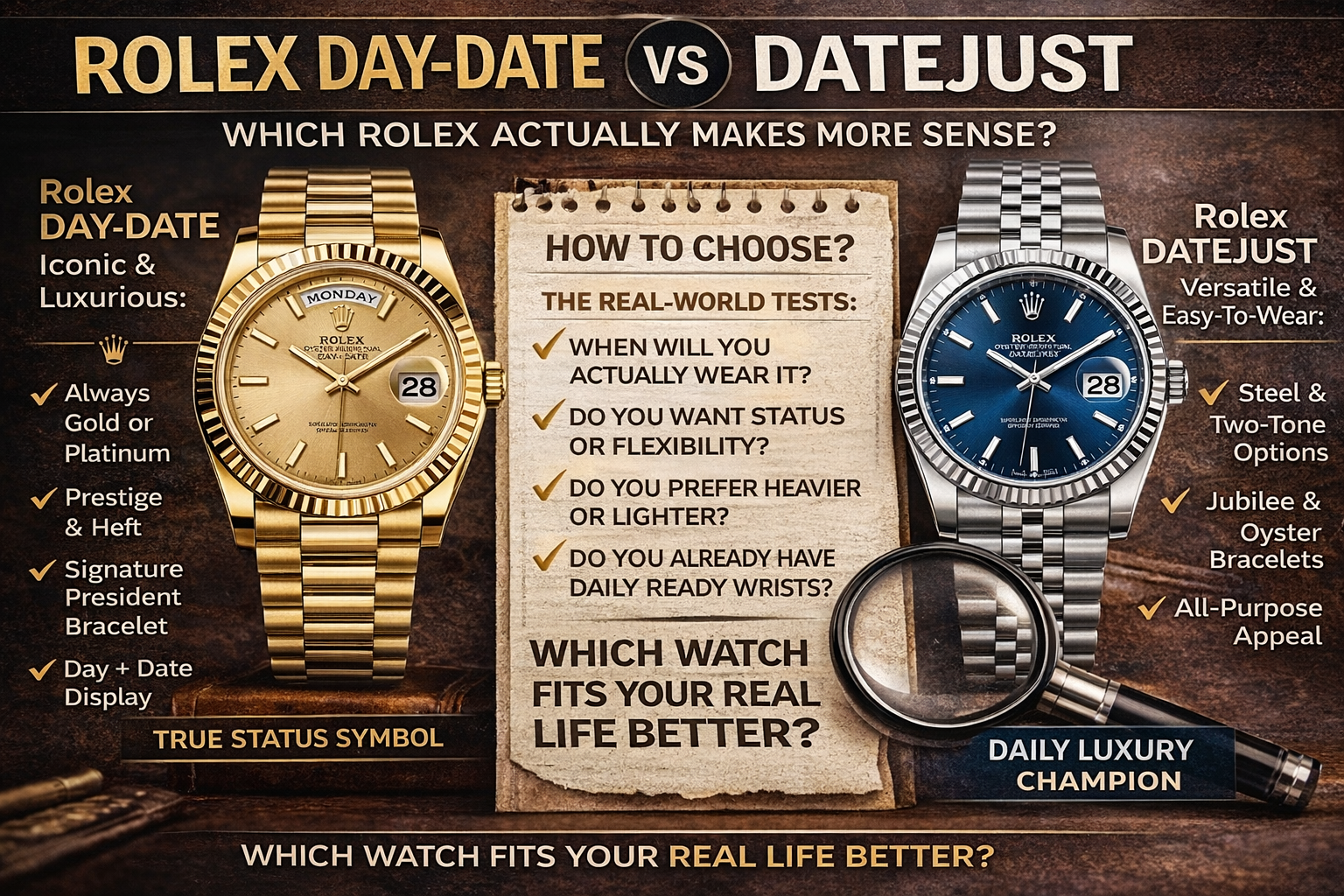
Most people think this is a status comparison.
It’s not.
It’s a lifestyle decision disguised as a watch choice.
On paper, the Rolex Day-Date is “above” the Datejust.
More precious metal. More presence. More recognition.
But in real life?
A surprising number of people who can afford a Day-Date still end up wearing a Datejust more often.
Not because it’s cheaper.
Because it’s easier.
And if you don’t understand that difference before buying, you’re very likely to make the wrong decision.
The quick answer (before we go deep)
- Buy Day-Date if you want presence, weight, and unmistakable status
- Buy Datejust if you want flexibility, daily wear, and zero friction
If you're building a one-watch collection, this connects directly with
👉 One-Watch Collection Explained: How to Choose the Single Automatic Watch You’ll Actually Keep Wearing
Now let’s break it down properly.
What actually separates Day-Date and Datejust
Forget specs for a second.
Here’s the real difference:
Day-Date = identity piece
Datejust = everyday tool-luxury
Everything else comes from that.
1. Materials: this is where the decision really starts
The biggest difference is simple:
- Day-Date = only precious metals (gold or platinum)
- Datejust = mostly steel or steel + gold
That one detail changes everything.
Real-world impact:
A Day-Date is heavier, more noticeable, and instantly signals luxury.
A Datejust blends in.
Not cheap-looking. Just… socially easier.
Example
A client (mid-30s finance job, London) bought a yellow gold Day-Date 40.
Loved it.
Wore it… twice a week.
Why?
“Too much for normal days.”
He later added a Datejust 41 and ended up wearing that 5x more often.
2. Design language: loud vs controlled
The Day-Date is not subtle.
- Fluted bezel + polished gold + President bracelet
- Full dial with day + date
- Always looks “complete”
The Datejust is more flexible:
- Smooth or fluted bezel
- Jubilee or Oyster bracelet
- Cleaner dial options
If you care about versatility, this connects directly with
👉 Black Dial vs White Dial Watch: Which One Is More Versatile for Everyday Wear?
3. Bracelet feel: this is underrated but critical
This is where many buyers don’t think enough.
Day-Date → President bracelet
- Softer
- More fluid
- Feels like jewelry
Datejust → Jubilee or Oyster
- Jubilee = comfort + elegance
- Oyster = sporty + firm
If you're comparing bracelets specifically, this also ties into
👉 Bracelet Watch vs Leather Strap Watch: Which One Is Better as Your First Automatic?
4. Daily wear reality (this is where decisions flip)
This is the part most articles skip.
Day-Date in real life:
- You think before wearing it
- You notice it on your wrist
- Other people notice it too
Datejust in real life:
- You forget you're wearing it
- Works with everything
- No mental friction
Honest question you should ask yourself:
Do you want a watch you notice
or a watch you live with?
That answer decides more than price.
5. Versatility: this is why Datejust wins for most people
The Datejust is one of the strongest “GADA” watches ever made.
If you haven’t read this yet:
👉 GADA Watch Explained: What It Means, Why It Matters, and How to Choose One That Actually Fits Your Life
It works with:
- office
- travel
- casual
- formal
- daily wear
Day-Date?
More situational.
Still wearable daily — but not for everyone.
6. Price vs psychological comfort
Let’s be honest.
The price difference is not just financial.
It’s psychological.
Day-Date:
- Higher entry price
- Higher mental pressure
- Higher “should I wear this today?” factor
Datejust:
- Easier to justify
- Easier to wear
- Easier to enjoy
7. Size and fit (often overlooked)
Both come in multiple sizes, but wear differently.
- Day-Date 40 feels heavier and more present
- Datejust 36 or 41 wears lighter and more balanced
If you're unsure about sizing:
👉 Automatic Watch Size Guide: 36mm vs 38mm vs 40mm vs 42mm — What Actually Fits Your Wrist?
8. The mistake most buyers make
They think:
“Day-Date = upgrade”
But that’s not always true.
Sometimes it’s a different category, not a better one.
Real scenario
Buyer upgrades from Datejust to Day-Date.
First month: excited.
Second month: wearing less.
Third month: back to steel watch daily.
Why?
Because ease beats status long-term.
9. Should you consider replicas or “cheaper versions”?
This matters more than people admit.
Some buyers look at Day-Date price and think:
“I’ll just get a replica.”
Bad move.
If what you want is the feeling of ownership, a fake kills that immediately.
Read this before even thinking about it:
👉 Homage vs Replica vs Counterfeit Watch: What’s the Difference and What Should You Actually Buy?
Better options:
- Buy a Datejust
- Buy pre-owned
- Or wait
10. Which one actually makes more sense (clear breakdown)
Choose Day-Date if:
- You want visible luxury
- You like weight and presence
- You already have daily watches
- You enjoy the “statement” aspect
Choose Datejust if:
- You want one watch for everything
- You care about daily wear comfort
- You don’t want to think before wearing
- You value versatility over status
The real answer (most honest version)
For most people, the Datejust makes more sense.
Not because it’s cheaper.
Because it fits real life better.
The Day-Date is amazing — but it’s a specific watch for a specific mindset.
Final thought
This isn’t about which watch is better.
It’s about which one you’ll actually wear.
Because the best watch is not the one that impresses people.
It’s the one that quietly becomes part of your life.
FAQ
Is Day-Date better than Datejust?
Not universally. Day-Date is more luxurious, but Datejust is more versatile and wearable daily.
Why is Day-Date more expensive?
Because it’s only made in precious metals like gold or platinum.
Can Datejust be a one-watch collection?
Yes — it’s one of the best one-watch options available.
Is Day-Date too flashy for daily wear?
For some people, yes. It depends on lifestyle and comfort with visibility.
Which holds value better?
Both hold value well, but buying the right configuration matters more than the model.
Featured Snippet
Rolex Day-Date vs Datejust comes down to lifestyle: the Day-Date offers luxury and presence, while the Datejust delivers everyday versatility and comfort. For most buyers, the Datejust makes more sense as a daily watch.