How Does an Automatic Watch Work? Simple Beginner Guide
Introduction
If you’ve ever wondered how an automatic watch works without a battery, you’re not alone. Automatic watches can seem mysterious at first, but the idea behind them is surprisingly elegant.
In this beginner-friendly guide, we’ll explain how automatic watches work step by step, what parts make them function, and why many watch enthusiasts prefer them over quartz watches. Before diving into the mechanics, it helps to understand what an automatic watch is and who it's for.
New to automatic watches?
Start here first: What Is an Automatic Watch? Pros, Cons & Who Should Buy One
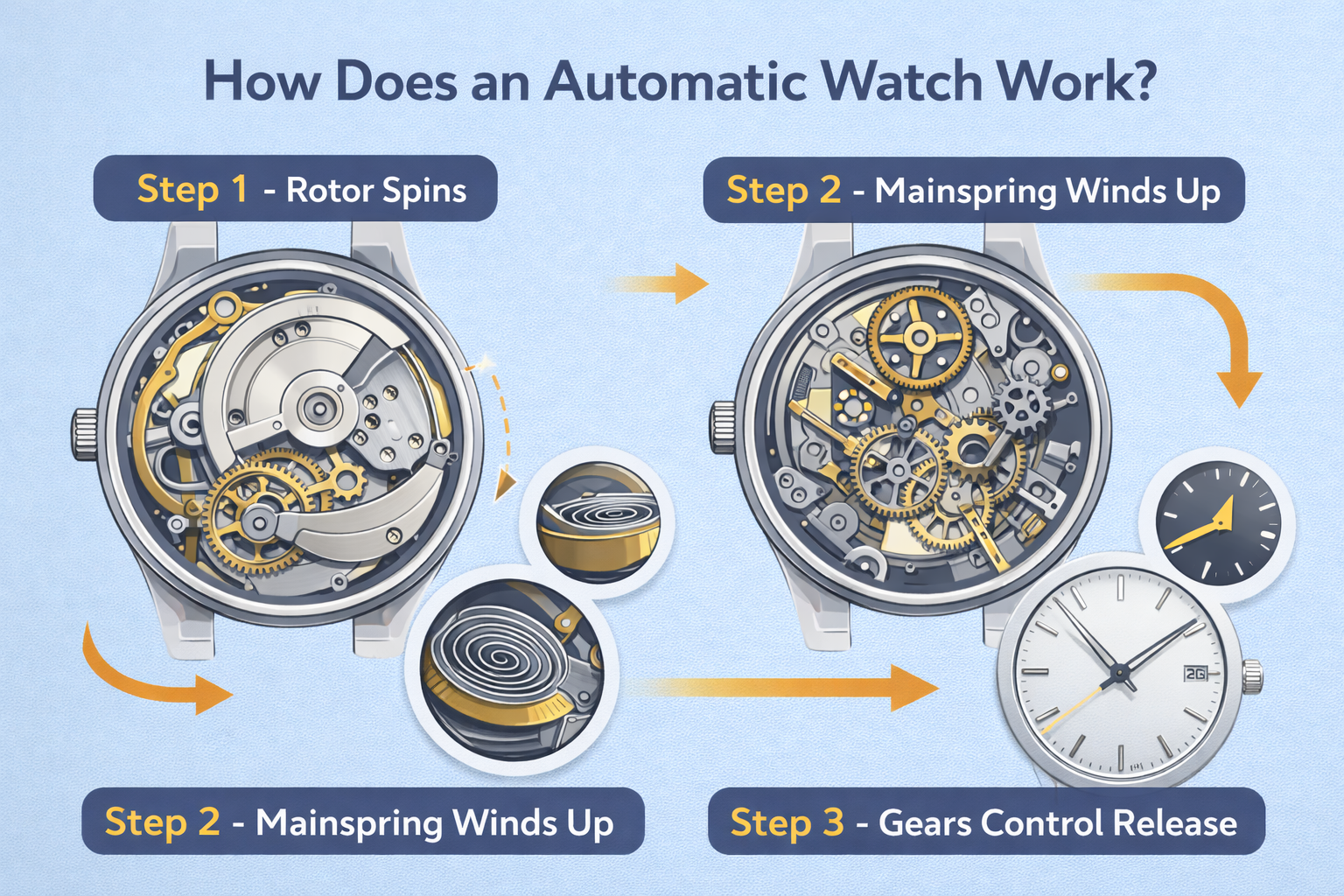
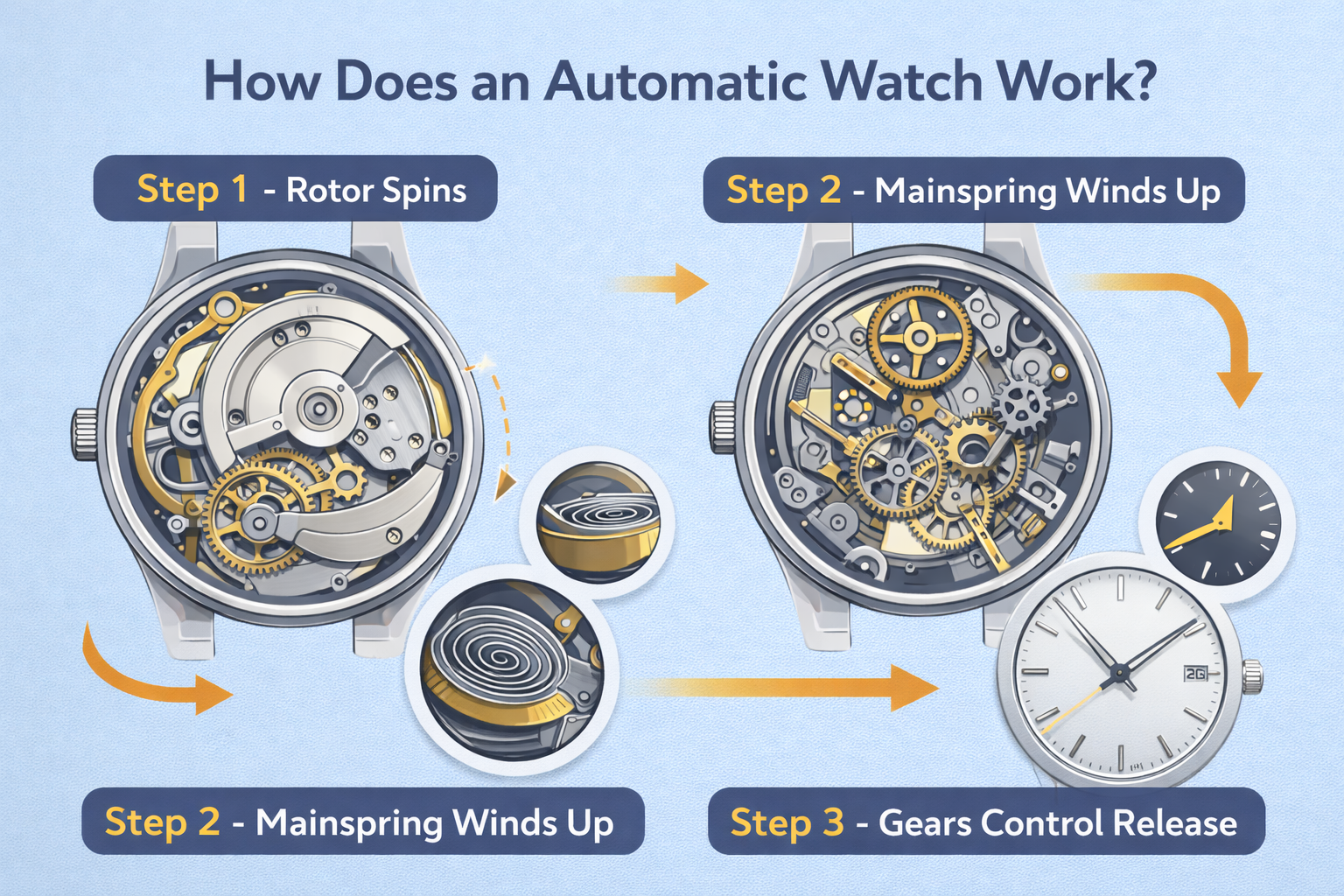 1. What Powers an Automatic Watch?
An automatic watch is powered by mechanical energy, not electricity.
Instead of using a battery, it captures energy from the natural motion of your wrist and stores it inside the watch. This stored energy is then released gradually to keep time.
The more you wear the watch, the more energy it generates.
2. The Rotor: The Heart of an Automatic Watch
Inside every automatic watch is a component called the rotor.
The rotor is a semi-circular metal weight that spins freely as your wrist moves. Each movement winds the mainspring slightly, storing energy.
Key points about the rotor:
-
Moves automatically with wrist motion
-
Winds the watch without manual input
-
Visible in many watches with exhibition casebacks
3. The Mainspring: Where Energy Is Stored
The energy generated by the rotor is stored in the mainspring.
When fully wound, the mainspring slowly releases energy to power the watch. Most automatic watches have a power reserve of 38–80 hours, depending on the movement. Because of this mechanical complexity, automatic watches differ significantly from quartz watches.
If the watch isn’t worn for a few days, it will stop and need rewinding or resetting.
4. The Escapement: Controlling Time
The escapement is responsible for controlling how energy is released.
It regulates the movement of the gears and ensures the watch advances in precise, controlled steps. This is what creates the smooth sweeping motion of the second hand that many people love about automatic watches.
5. How Accurate Are Automatic Watches?
Automatic watches are generally less accurate than quartz watches, but still precise enough for everyday use.
Typical accuracy ranges:
-
Automatic: ±5 to ±15 seconds per day
-
Quartz: ±15 seconds per month
For many enthusiasts, the craftsmanship and mechanical beauty outweigh the slight loss in accuracy.
 6. Do Automatic Watches Need Batteries?
No. Automatic watches do not use batteries.
However, they do require:
-
Regular wear or winding
-
Periodic servicing (every 3–5 years)
-
Care around shocks and magnetism
If convenience is your top priority, a quartz watch may be a better option.
Related reading: Automatic Watch vs Quartz Watch: What’s the Real Difference?
7. Are Automatic Watches Good for Beginners?
Yes—if you understand what you’re getting.
Automatic watches are great for beginners who:
-
Want to learn how watches work
-
Appreciate craftsmanship
-
Are okay with light maintenance
They may not be ideal for people who want absolute accuracy with zero involvement.
Final Thoughts
Understanding how an automatic watch works helps you decide whether it fits your lifestyle. From the rotor to the escapement, every part plays a role in turning motion into time.
If you enjoy tradition, engineering, and wearing something truly mechanical, an automatic watch can be deeply rewarding.
👉 Want to know if an automatic watch is right for you?
Read our full beginner guide on automatic watches.