The Wristwatch as a Narrative: Why Mechanical Timepieces Endure as Symbols of Identity
In our modern world, saturated with mass-produced goods and ephemeral digital trends, the objects we choose to carry with us become extensions of our identity. Among these, few items speak as eloquently and enduringly as a mechanical wristwatch. Far more than a simple timekeeping tool, it operates as a non-verbal personal manifesto, communicating values, knowledge, and heritage without uttering a single word. This persistent allure for the discerning individual is not rooted in nostalgia alone, but in the watch’s unique capacity to embody a narrative—a story of human artistry, personal history, and deliberate choice in an age of automation and disposability. This exploration delves into why, against all odds of technological supremacy, the mechanical watch remains the ultimate signature of taste.
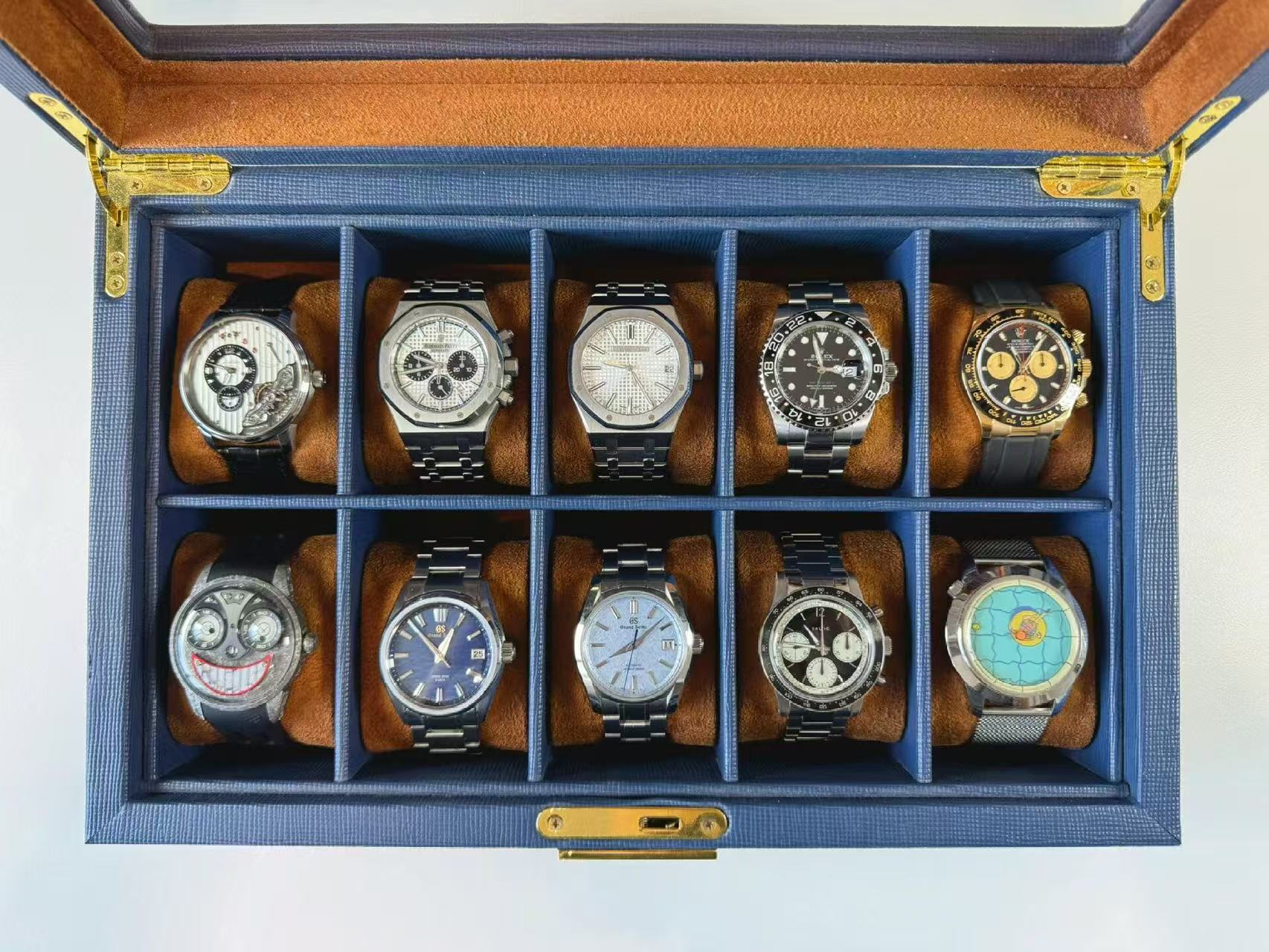
I. A Canvas of Personal Identity: The Watch as a Curated Choice
Unlike a smartphone—a ubiquitous, necessary tool that is largely uniform in function and increasingly in form—a watch is a purely discretionary accessory. Its selection is therefore one of the most personal style decisions one can make.
The Dial as a First Impression
The face of a watch is its most intimate point of contact with the world. The choice between a minimalist Bauhaus dial from Nomos Glashütte, the complex symphony of a Patek Philippe perpetual calendar, or the robust tool-like clarity of a Rolex Submariner, communicates volumes about the wearer’s aesthetic and priorities. It whispers of an appreciation for clean design, intellectual complexity, or rugged functionality. This is a curated choice, reflecting a depth of understanding that transcends mere brand recognition.
The Engineering Ethos: A Statement of Values
Choosing a mechanical movement is, in itself, a philosophical stance. In a world that prizes absolute efficiency and effortless convenience, selecting a device that is inherently less accurate, requires regular care, and derives its energy from kinetic human motion or manual winding, is a profound act. It signals a value system that prizes human ingenuity, tangible craftsmanship, and long-term connection over sterile, automated perfection. It is an embrace of the analog soul in a digital body.
II. The Heirloom Imperative: Time Transformed into Legacy
Perhaps the most powerful dimension of a mechanical watch is its capacity to transcend the lifespan of its original owner. This transforms it from a personal possession into a vessel for legacy.
Built for Generations, Not Product Cycles
A quality mechanical watch is engineered with longevity as a core principle. Its case is designed to be opened, its movement built to be serviced and repaired. Brands like Vacheron Constantin, with their motto “Manufacture depuis 1755,” literally build upon centuries of continuous craftsmanship. This stands in stark opposition to the planned obsolescence of modern electronics. A smartwatch is a companion for a few years; a mechanical watch is a companion for life—and potentially for the lives of one’s children and grandchildren.
The Emotional Weight of Patina and Provenance
As a mechanical watch ages, it accrues not just years, but character. The gentle softening of its case edges, the unique fading of its dial (tropical patina), and the minor marks from a life lived tell its story. When passed down, it carries with it the imprints of its previous guardian. To wear a parent’s or grandparent’s watch is to feel a tangible, daily connection to them; to track time with the same mechanism they did. This imbues the object with an emotional gravity no new purchase, regardless of price, can ever possess. It becomes a touchstone for memory and continuity.
III. The Sanctuary of "Unplugged" Time: A Mindful Counter-Culture
In an era of constant connectivity and digital distraction, the mechanical watch offers a subtle but powerful form of tactile respite.
The Ritual of Engagement
The acts of winding a manual watch each morning, or setting the date on an automatic, create brief but meaningful rituals. These are moments of focused, quiet interaction with a complex, physical object. They pull us out of the digital stream and ground us in a deliberate, analog reality. This mindful engagement fosters a different kind of relationship with time itself—one that feels measured and personal, rather than frantic and externally imposed by pinging notifications.
A Symbol of Undivided Attention
In social or professional settings, glancing at a wristwatch is a universally understood, yet subtly polite, gesture. It stands in contrast to the act of pulling out a smartphone, which immediately signals a shift of attention to the digital world and can be perceived as dismissive. A watch allows one to discreetly manage time while remaining fully present in the physical conversation and moment. In this way, it becomes an instrument of respect and focused presence.
IV. The Modern Conundrum: Irrelevance as the Ultimate Luxury
Paradoxically, the mechanical watch’s greatest strength in the 21st century is its fundamental unnecessariness. It has been liberated from its core utilitarian function.
The Freedom of Artistic Expression
Freed from the burden of having to be the most accurate timekeeper, watchmakers have pushed the boundaries of their art into realms of breathtaking creativity and technical spectacle. The MB&F Horological Machines, which resemble miniature spacecraft or kinetic art; the ethereal floating tourbillons of Greubel Forsey; or the sublime enamel and engraving artistry on dials from Kari Voutilainen—these are expressions of pure creativity. They are worn not to tell time, but to celebrate the zenith of human artistic and technical achievement on the wrist. This transforms the watch into wearable art.
The Ultimate Discretion of Knowledge
Owning and appreciating a fine mechanical watch often involves what is called “quiet luxury” or the “if you know, you know” principle. Its value and sophistication are not broadcast loudly through logos, but are contained in details discernible only to fellow enthusiasts: the sound of the winding rotor, the quality of the movement finishing visible only through the case back, the specificity of a complication. This creates a community of informed appreciation, a silent fellowship based on shared knowledge rather than conspicuous consumption.
Conclusion: The Enduring Pulse
The mechanical watch endures because it satisfies a human need that technology, for all its wonders, cannot: the need for meaningful physicality, emotional resonance, and a lasting narrative. It is an antidote to the disposable, the virtual, and the transient.
For the individual of taste, it represents the perfect synthesis of art and science, history and personal journey, craftsmanship and identity. It is a declaration that some things are worth preserving, that beauty can be found in complexity, and that our most cherished objects can tell a story far greater than their function. In its steady, sweeping heartbeat, we find a connection—to history, to craft, to loved ones, and to a more considered, intentional way of living. That is not just a matter of telling time; it is a philosophy for life, worn on the wrist.