The Quiet Revolution on Her Wrist: How Women's Watches Evolved from Decoration to Declaration
Delicate, bejeweled, and often miniature, they were considered the finishing touch to an outfit—a pretty accessory subservient to fashion’s whims. But to view the modern women's watch through this archaic lens is to miss a profound evolution. Today, a woman’s timepiece is no longer just an accessory; it is a strategic instrument of self-expression, a symbol of feminine power that harmonizes elegance with intention. This is the story of how women’s watches shed their ornamental chains and claimed their place as a cornerstone of personal identity.
From Chatelaine to Wristlet: A Brief History of Autonomy
The journey begins in the late 19th and early 20th centuries. While men carried pocket watches, practical tools for managing the industrial world, women’s timepieces were often decorative pendants or brooches. The pivotal shift came with the wristwatch itself—a format pioneered, ironically, for women. The legendary "Santos-Dumont" watch created by Louis Cartier in 1904, though named for a man, was born from aviator Alberto Santos-Dumont’s need for a hands-free timepiece. Yet, it was quickly adopted by stylish women, signaling a new era of practicality and modernity.
The true watershed moment was World War I. As women stepped into roles traditionally held by men—in factories, hospitals, and offices—they needed to tell time quickly and efficiently. The wristwatch became an essential tool for the working woman, a symbol of her newfound responsibility and independence. This planted the seed: a watch could be both useful and an emblem of personal agency.
The Two Pillars: Jewelry Watches & The Rise of the "Feminine Tool"
Post-war, the narrative splintered into two powerful, and sometimes converging, streams.
1. The Jewelry Watch: Craftsmanship as Power. The mid-20th century saw the zenith of the jewelry watch. Brands like Cartier, Van Cleef & Arpels, and Piaget created breathtaking miniature masterpieces. The Cartier Panthère, with its sleek, linked bracelet, was more than sparkle; it was a symbol of untamed grace and luxury. The Piaget Polo, with its integrated bracelet and lavish gem-setting, exuded 70s disco-era confidence. These watches were unapologetically beautiful, but their message was potent. Wearing a significant jewelry watch was a statement of arrival, of taste, and of the financial and social power to acquire art for the wrist. It declared, "I appreciate heritage craftsmanship, and I choose to wear it."
2. The Modern Neutral & The Complicated Watch. The late 20th and 21st centuries ushered in a seismic shift. Inspired by unisex and men’s designs, women began embracing watches as sophisticated instruments. The classic stainless steel sports watch—think of an elegant, mid-size model with a clean dial—became a wardrobe staple for the professional woman. It was no longer about mimicking a "man’s watch," but about choosing a design that resonated with a modern, active, and multifaceted life.
Even more revolutionary was the embrace of complicated watches—timepieces with mechanical functions like chronographs (stopwatches), moon phases, or GMTs (dual time zones). Brands like Patek Philippe (with the iconic, now gender-neutral Twenty-4 not just as jewelry but in complication forms) and Audemars Piguet began creating serious mechanical works for women who were connoisseurs. This wasn’t about size, but about intellectual engagement. Choosing a watch with a visible mechanical movement (a skeleton or open-heart design) says, "I am interested in the engineering, the history, the soul of the mechanism." It’s a powerful rejection of the "just pretty" stereotype.
The Modern Wardrobe Synergy: From Power Suit to Evening Gown
The modern woman’s watch collection is a toolkit for life, each piece serving a distinct sartorial purpose.
-
For the Power Suit & Office Attire: Here, clarity and confidence are key. A mid-size watch with a clean dial (white, black, or navy), perhaps on a metal bracelet or a refined leather strap, is perfect. It’s professional, legible, and commands respect without aggression. A classic stainless steel model with a slim profile pairs impeccably with a tailored blazer and trousers, reinforcing an image of competence and timeless style. It’s the 21st-century successor to the wartime tool watch.
-
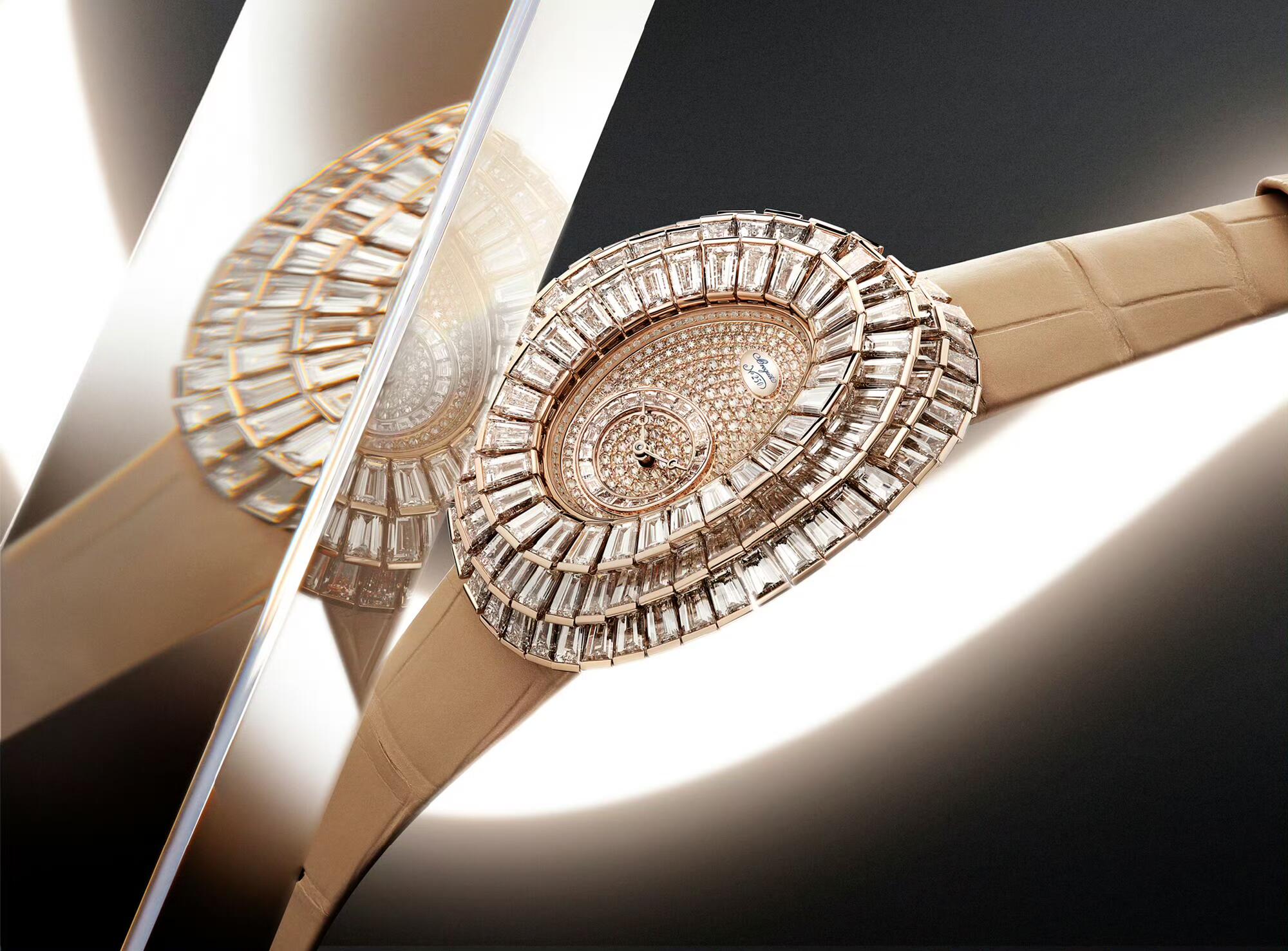
For Evening & Black-Tie Events: This is the domain of the high jewelry watch or an exceptionally sleek, ultra-thin dress piece. A diamond-set watch on a satin or leather strap adds a point of light and sophistication to a little black dress or gown. It whispers luxury rather than shouting it. The elegance is in the details—the sparkle of the indices, the curve of the case under cuffless sleeves. It speaks to a celebratory, refined femininity.
-
For Smart Casual & Weekend Wear: This is where versatility shines. A modern neutral watch with an interchangeable strap system is ideal. Swap a metal bracelet for a colored leather or fabric strap to match a chic weekend outfit. It bridges the gap between casual ease and deliberate style, proving that thoughtfulness need not be formal.
Conclusion: The Wrist as a Canvas for Identity
The evolution of the women's watch from mere decoration to a declaration is a mirror of women’s own societal evolution. It is a story of claiming functionality, embracing complexity, and redefining beauty on one’s own terms. Today, whether a woman chooses a historic jewelry watch bursting with gemstones, a starkly modern mechanical masterpiece, or a versatile classic, she is making a statement.
She is not accessorizing an outfit; she is articulating an identity. Her watch speaks of her appreciation for heritage or innovation, her professional acumen, her personal narrative, and her inherent power. It is, in the truest sense, elegance with a purpose—a quiet revolution ticking confidently on her wrist.