The Dancer's Hand: Guilloché, the Hypnotic Art of Engine-Turning in Swiss Watchmaking
This is guilloché (pronounced gee-lo-shay), or engine-turning, one of the most captivating and ancient decorative crafts in the Swiss watchmaking pantheon. More than mere decoration, it is a testament to rhythm, geometry, and a tactile connection between the artisan and the metal—a signature of the handcrafting that defines haute horology. To witness guilloché is to witness the Jura’s micro-artistic soul made visible.
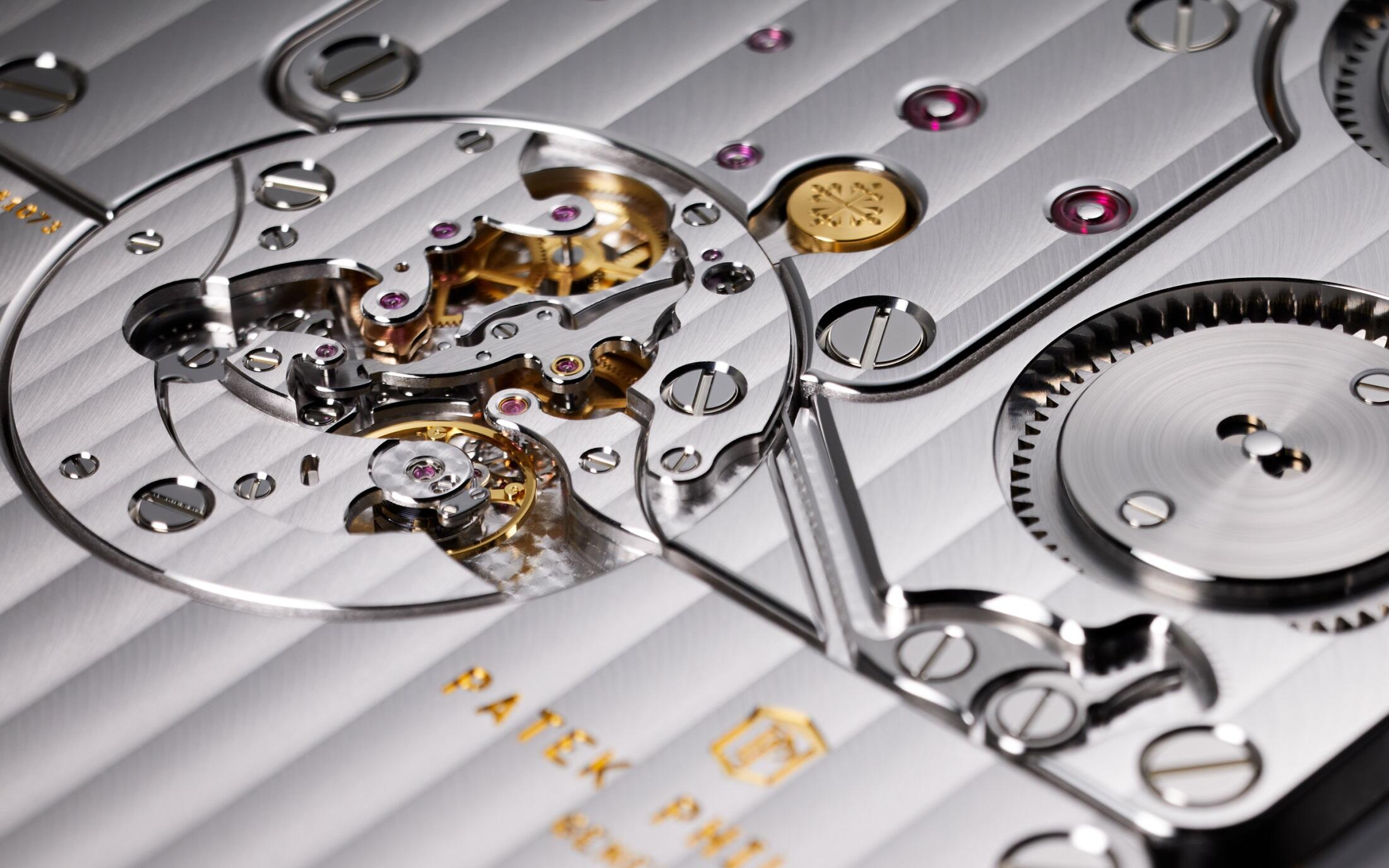
What is Guilloché? The Poetry of Repetition
At its core, guilloché is the practice of engraving intricate, precise, and repetitive geometric patterns onto a metal surface—most commonly a watch dial, case back, or movement component. Unlike freehand engraving, which features organic scenes, guilloché is mathematical and periodic. Its power lies in its infinite, hypnotic repetition: concentric circles (sunray), interwoven waves (barleycorn), delicate meshes (hobnail), or complex rosettes.
The magic, however, is in the light. The meticulously cut grooves act as prisms and mirrors. As the wrist moves, light cascades across the pattern, creating a dazzling play of reflections and shadows that gives the dial breathtaking depth and vitality. A guilloché dial is never static; it is alive with light. This functional beauty also served a historical purpose: the textured patterns helped to diffuse reflections, improving legibility in an age before anti-reflective coating.
The Machine and the Maestro: A Ballet of Precision
The term "handcraft" can be misleading. Guilloché is not done with a simple chisel. It is performed on a rose engine lathe or a straight-line engine, magnificent 19th-century machines that are themselves works of art. These are not automated CNC mills; they are mechanical partners that require a maestro to conduct.
-
The Rose Engine Lathe: This is the quintessential guilloché machine. The metal blank (often gold or silver) is fixed to a rotating spindle. The artisan, or guillocheur, selects and attaches a small, hardened steel tool called a roc. The genius of the rose engine is a large, irregularly shaped cam (the "rose") mounted on the spindle. As the spindle turns, the cam pushes the cutting tool laterally in a precise, oscillating pattern. The combination of the spindle's rotation and the cam's dictated movement allows for the creation of stunning circular patterns like clous de Paris (hobnail) or spirals.
-
The Straight-Line Engine: For linear patterns such as waves or straight lines, this machine is used. The workpiece is mounted on a sliding carriage that moves back and forth under a stationary cutting tool. A pattern wheel with undulating edges guides the carriage, creating the repetitive linear oscillations.
The true artistry lies entirely in the hands and judgment of the guillocheur. He must:
-
Choose and sharpen his own tools to a razor's edge.
-
Calculate the precise depth of cut—a fraction of a millimeter too deep ruins the piece; too shallow, and the pattern lacks drama.
-
Maintain perfect, rhythmic consistency in the hand-cranking of the machine for hours, as any hesitation or change in pressure creates a visible flaw.
-
Design the pattern sequence in his mind, often overlapping multiple passes with different cams to create layered, incredibly complex designs like the tremblage (a shimmering, cloud-like effect).
A single dial can take days or even weeks to complete. One lapse in concentration, and the piece—which may represent dozens of hours of work—is scrap. It is an act of immense discipline, resembling a meditative performance.
A Living Heritage in the Jura and Beyond
While guilloché is practiced by a few specialized ateliers and within the holy halls of top manufactures, its spirit is pure Jura. It embodies the region's core tenets: transforming isolation into deep focus, marrying mechanical ingenuity with aesthetic sensitivity, and respecting the tradition of the tool while creating contemporary beauty.
Brands like Breguet have made the fluted "Breguet" pattern on case bands and the guilloché dial their signature for over two centuries. Patek Philippe, Vacheron Constantin, and Audemars Piguet preserve and champion the craft for their most exclusive pieces. Independent masters in the Vallée de Joux continue to push the boundaries, creating bespoke dials that are individual works of art.
Owning a Fragment of the Dance
To choose a watch with a true, hand-executed guilloché dial is to own something profoundly human. You own the rhythm of the artisan's breath, the steady pulse of his hand on the crank, and the accumulated knowledge of generations. In an age of digital replication, the slight, beautiful imperfection of a human-made pattern—the "soul" in the machine—becomes the ultimate luxury.
It is a reminder that in Swiss watchmaking, beauty is never just skin deep. It is engineered, calculated, and painstakingly born from a dialogue between man, metal, and a timeless machine. The guilloché dial does not just tell the hour; it tells a story of patience, geometry, and light—a story forever etched in metal, one exquisite, trembling line at a time.