Beyond the Surface: The Business Logic and Future Trends of Art Empowering Luxury
Following our exploration of iconic art-luxury crossovers, a critical question arises: why are top luxury brands increasingly embracing art? This alliance goes far beyond attractive packaging or limited-edition gimmicks; it is a profound strategic choice concerning brand identity reinvention, value construction, and future positioning.
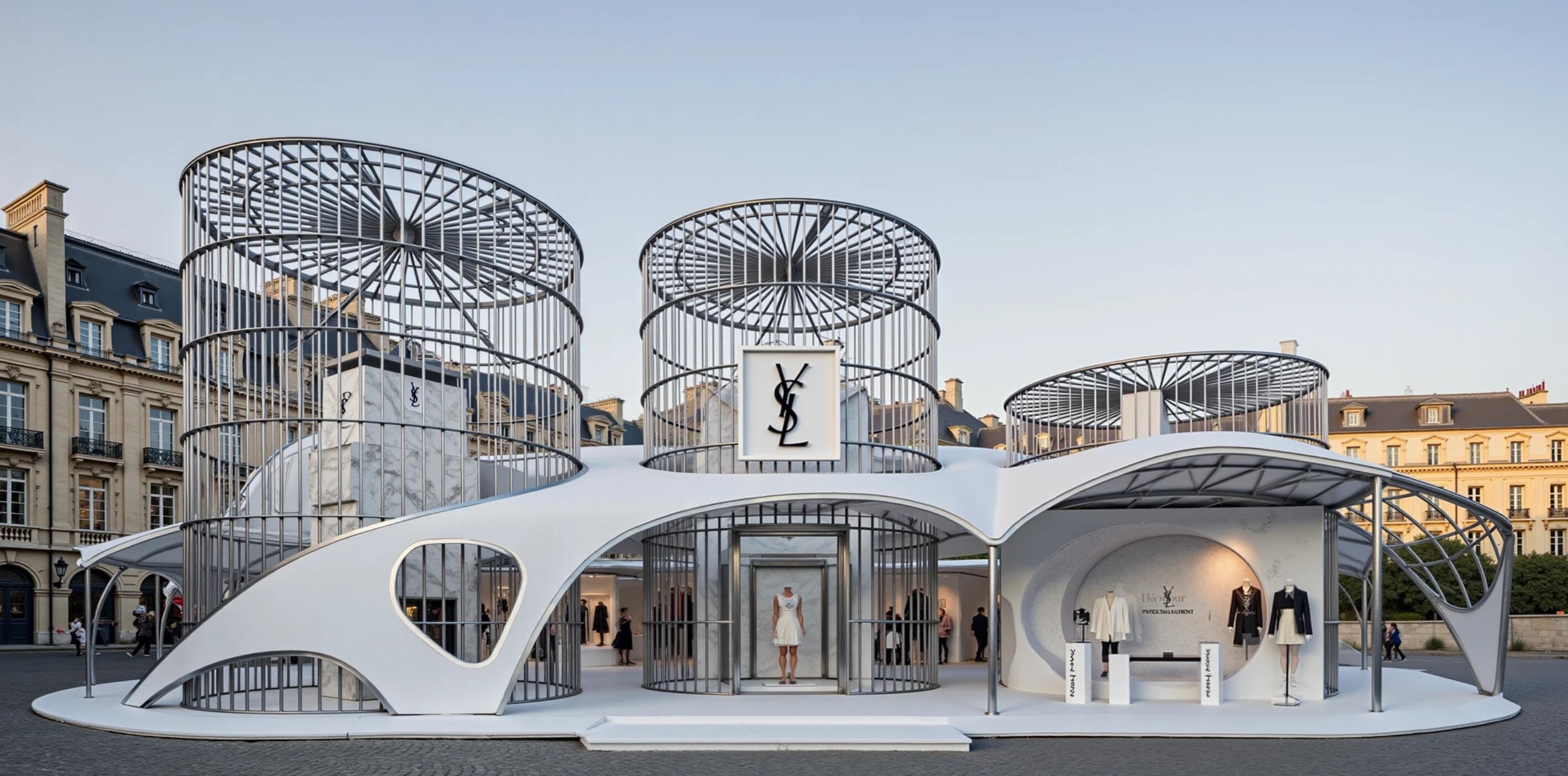
This article analyzes the underlying business logic, consumer psychology, and future trends driving this phenomenon.
Art as an Anchor for Brand Identity
In an era of product saturation, art provides brands with scarce cultural capital. As Prada's CEO insightfully noted, "Business can buy attention, but only culture wins time." Artistic collaborations help brands accumulate this intangible asset that appreciates over time, rather than generating short-lived marketing heat.
The case of Loewe is particularly telling. Through sustained collaboration with global artists, the brand has materialized its "craft revival" philosophy into tangible products and spatial experiences. From the earthy, gradient textures inspired by British ceramicist Jennifer Lee to the woven structures drawn from Japanese bamboo artisan Akio Hasegawa, crafts from diverse fields are translated into Loewe's classic bags and ready-to-wear—infusing not just the decoration, but the very 'skeleton' of structure, texture, and touch.
This deep cultural implantation has allowed Loewe to establish a unique identity in the competitive luxury market—positioning itself not just as a seller of products, but as a cultural custodian and reviver of traditional craftsmanship.
The Evolution of Artistic Collaboration Business Models
From Co-branding to Co-creation
Early artistic collaborations often remained in the realm of simple licensing—printing art onto products. Today, these partnerships have evolved into deep co-creation, where artists are treated as strategic assets, deeply involved in all stages from product development and spatial design to brand storytelling.
Prada's "Human Brains" project represents another model of deep engagement. Launched in 2018, this initiative supports global interdisciplinary research in neuroscience and art. In 2023, Prada hosted the "Human Brains: Preserving the Brain – Forum on Neurodegenerative Diseases" at the Prada Rong Zhai in Shanghai, open free to the public.
This choice, seemingly distant from the core fashion business, is a masterstroke by Prada—it selects a field disconnected from the mass consumer chain yet profoundly relevant to future human cognition, using a narrative woven from art and science to inject the brand with a cultural depth far beyond fashion surfaces.
The Shift from Product to Experience
Another evolution in luxury-art collaborations is the expansion from mere product partnerships to comprehensive experience design.
Chanel's "Espace Gabrielle Chanel" within the Power Station of Art complex in Shanghai integrates not only brand history but also a public contemporary art library, a Chinese contemporary art archive, an art theater, and a waterfront platform.
This approach positions the brand as a partner in the local public cultural realm, resonating with the city's cultural renewal.
Consumer Psychology: Buying Meaning, Not Just Products
The effectiveness of artistic crossovers is rooted in a shift in consumer psychology. Modern luxury consumers seek not just product functionality, but the consumption of meaning and identity affirmation.
Signaling and Self-Congruity
Buyers choose brands that express their ideal self. When consumers purchase a luxury item from an artist collaboration, they are not just buying a bag or a garment; they are buying a resonance with the artist's creativity and the personal taste and values it communicates.
Scarcity and Cultural Capital
Limited editions and numbered works generate anticipation, but they must be perceived as managed exclusivity, not artificial restriction. Artistic collaboration series inherently possess scarcity, and coupled with their cultural内涵, create a dual scarcity—not only limited in quantity but also unique in cultural value.
The Commercial Impact of Artistic Collaborations
When executed effectively, artistic crossovers can yield significant commercial returns:
-
Value Enhancement: Art collaboration series typically command higher price premiums, as consumers are willing to pay extra for unique cultural value.
-
Brand Differentiation: In a competitive market, artistic collaborations help brands establish a unique identity, avoiding homogenized competition.
-
Media Attention: Artistic collaborations naturally possess storytelling appeal, garnering media exposure and public discussion far exceeding that of regular products.
-
New Audience Attraction: Through different artists' fan bases, brands can reach new consumer segments beyond their traditional clientele.
Future Trends: The Next Frontier of Artistic Crossovers
From Western-Centric to Global Vision
Luxury-art collaborations are showing a clear decentralization trend. Versace recently invited four pioneering Asian artists to create works inspired by the brand's iconic "Medusa." Thai artist Burin B. Pong imagined a mythical goddess residing in the deep sea, summoning the viewer's gaze in the form of spells crafted from gold.
This focus on non-Western artists reflects the luxury industry's growing emphasis on cultural diversity and responds to the cultural identity of consumers in emerging markets.
Technology as the New Medium
Digital technology is becoming a new stage for art-luxury crossovers. Augmented Reality allows customers to visually select handbags in their own living room or virtually try on jewelry, provided the interface is refined and elegant, not gimmicky. AI recommendation engines can suggest items perfectly aligned with a customer's established aesthetic, provided the recommendations align with the brand's tone.
The most successful brands will seamlessly integrate technology with art, ensuring every interaction feels personalized and sophisticated.
The Fusion of Sustainability and Art
In the future, we will see more cases combining artistic expression with sustainable practices. This goes beyond using eco-friendly materials; it involves rethinking the entire lifecycle of luxury goods—from production and repair to eventual resale—through an artistic lens.
Recommendations for Brands
For luxury brands considering artistic collaborations, the following points are worth noting:
-
Long-termism: Avoid one-off projects; build long-term relationships with artists to form a coherent aesthetic narrative.
-
Depth Over Breadth: Choose a few deep collaborations over numerous superficial co-brandings.
-
Brand Alignment: Ensure the artist's style and values have genuine points of resonance with the brand's DNA.
-
Holistic Integration: Weave artistic collaboration into all consumer touchpoints—product, space, digital experience.
Conclusion: Resonance Beyond Transaction
At its core, the collaboration between art and luxury is a profound experiment in value creation. It proves that in an age of material abundance, the greatest appeal lies not in having more, but in having what is more meaningful; not in what is more expensive, but in what resonates more deeply.
When fashion craftsmanship meets artistic soul, the creation is not just a product, but a cultural symbol capable of transcending time. As demonstrated by Louis Vuitton's collaborations, this fusion has surpassed mere business strategy, becoming a cultural symbiosis.
In the future luxury market, the most successful brands will not be those focused solely on transactions, but those capable of weaving meaning, creating culture, and sparking resonance. Art is the most valuable companion on this journey.